Gosford Park
This was the official website for the 2001 Robert Altman's scathingly funny and deliciously wicked film, Gosford Park. Many critics considered it Robert Altman's best film in more than a decade. The content below is from the site's 2001 archived pages and reviews from outside sources including Rotten Tomatoes.
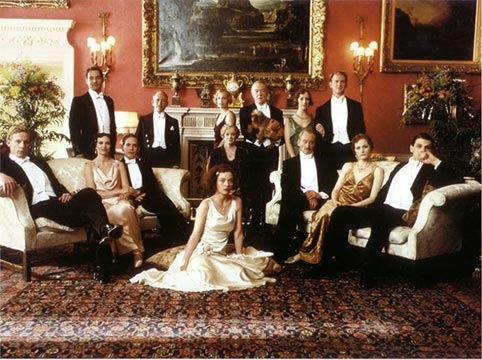
Gosford Park
Rating:R (for some language and brief sexuality)
Genre: Comedy , Drama , Mystery & Suspense
Directed By:Robert Altman
Written By:Julian Fellowes , James Fellowes
In Theaters:Dec 26, 2001
Wide On DVD:Jun 24, 2002
Box Office:$41,274,328.00
Runtime: 138 minutes Studio:USA Films
|
EILEEN ATKINSas Mrs. Croft |
ROBERT ALTMANDirector/Producer/Story |
+++
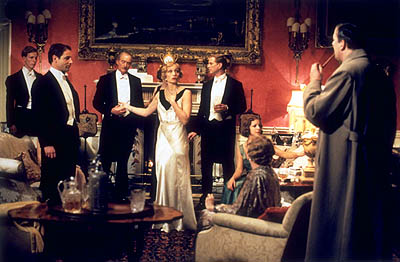
The film, Gosford Park is ultimately a highly nuanced social commentary circa the early 1930s in Great Britain, regarding the upper class and a sharp observation of the servant class. The labyrinthine relationships among the servants and the upper crust involving sexual infidelities, blackmail, out-of-wedlock children, murder and mayhem are knitted together brilliantly into a wonderfully textured tapestry.
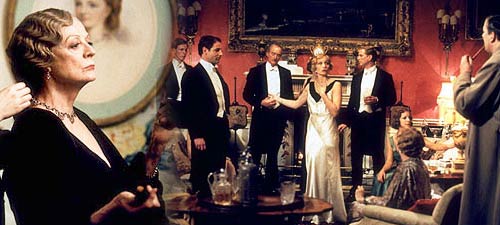
The American filmmaker, Robert Altman, takes a witty and absorbing look at the foibles of the British class system in this intelligent murder mystery set in the early '30s. Sir William McCordle (Michael Gambon) and his wife Lady Sylvia (Kristin Scott Thomas) are a pair of wealthy British socialites who have invited a variety of friends, relatives, and acquaintances to their mansion in the country for a weekend of hunting and relaxation. Among the honored guests are Constance (Maggie Smith), Lady Sylvia's matronly aunt; Ivor Novello (Jeremy Northam), William's cousin who is also a well-known actor and songwriter; and Morris Weissman (Bob Balaban), an American film producer who is friendly with Ivor and researching an upcoming project. Observing the proceedings are the domestic staff of the mansion, including imperious butler Jennings (Alan Bates); footmen George (Richard E. Grant) and Arthur (Jeremy Swift); Probert (Derek Jacobi), a valet to Sir William; housekeeper Mrs. Wilson (Helen Mirren); Mrs. Croft (Eileen Atkins), who oversees the kitchen; and Elsie (Emily Watson), a maid. Also on hand are the guests' personal servants, including Mary (Kelly Macdonald), Constance's maid; Henry (Ryan Phillippe), Weissman's valet; and Parks (Clive Owens), a butler. While the servants are required to display a high level of decorum, they are expected to be passive observers who do not comment on what they see, though the gossip among them travels thick and fast once they retire to the servants' quarters downstairs. And it turns out that there's plenty worth gossiping about, especially after Sir William turns up dead, and everyone is ordered to stay at the mansion while the police investigate the killing. Gosford Park also features Charles Dance, Tom Hollander, Natasha Wightman, and Ron Webster; the screenplay was written by Julian Fellowes, based on a story by Altman and co-star Bob Balaban. ~ Mark Deming, Rovi
TomatoMeter Critics 86% | Audience 78%
+++
REVIEWS
March 22, 2002
David Edelstein Slate Top Critic
Is there anyone but Altman who could have pulled off such an effervescent mix of satire, affection, and devastating rebuke? And attracted such an ensemble? And let everyone work at this high level?
Set in England between the World Wars, Robert Altman's Gosford Park (USA Films) is a satirical drawing-room whodunnit that is ultimately about the misery and in some cases tragedy of servants who lived to attend to aristocrats—employers who never questioned an unjust social order or their own immorality. It makes you think: "What shallow, oblivious, casually destructive people. How fitting that such a world proved unsustainable." Of course, it also makes you think: "What a sumptuous way to live. How comforting a world in which everyone knew his or her place." If you're like me, you finally reconcile these two lines of thought by concluding: "What a director." Is there anyone but Altman who could have pulled off such an effervescent mix of satire, affection, and devastating rebuke? And attracted such an ensemble? And let everyone work at this high level? And kept the action in perfect focus? And made it all so damned entertaining?
It's time to own up to my convictions: I await a new movie by Altman as I would a new ballet by Balanchine, a new symphony by Mahler, a new novel by Dickens. There is no modern director whose frames are so uninsistently alive and whose sympathies are so gracefully distributed. It wasn't always this way. After a flurry of masterpieces in the early '70s, the Altman of the late '70s and '80s often let his counterculture ire get the best of him, taking too-easy potshots at the characters in Buffalo Bill and the Indians (1976), A Wedding (1978), H.E.A.L.T.H.(1979), and many other films. It's possible that his mocking instincts will get the better of him, again: He's a volatile fellow. But in Gosford Park, his contempt for these upper-class monsters is kept in check by his awe for these marvelous British actors, who were encouraged on the set to improvise freely. The upshot isn't neutrality—Altman is never neutral. It's lively curiosity—a kind of buoyant raptness. If nothing else, he doesn't know what these people will do or say next. He's always poised for delight.
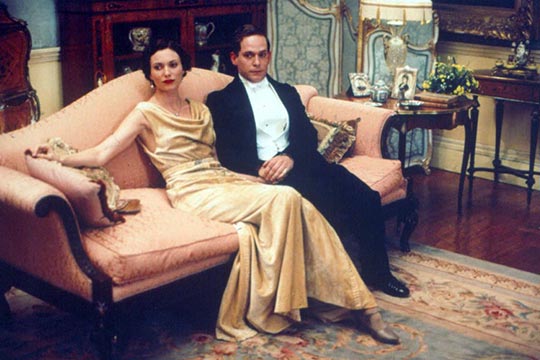
So are we, from the first rainy frames, in which Mary Macreachran (Kelly MacDonald), the new lady's maid of the Countess of Trentham (Maggie Smith), is drenched for the sake of helping her employer open a flask. They're on their way to a hunting party at the manor of old Sir William McCordle (Michael Gambon) and his sleek, insouciant wife, Lady Sylvia (Kristin Scott Thomas); it's more or less through Mary's eyes that we're introduced to this orderly (but tremulous) universe. The way Altman cuts between the upstairs and the downstairs—keeping his chattering classes in constant motion—is meant to disorient. It's all indirection, sometimes mischievous misdirection: You have to work to get your bearings, map out the relationships, separate the salient from the inconsequential—all while Altman and screenwriter Julian Fellowes are winking at you with sundry motives for murder, red herrings, and pointed shots of knives and poison bottles.
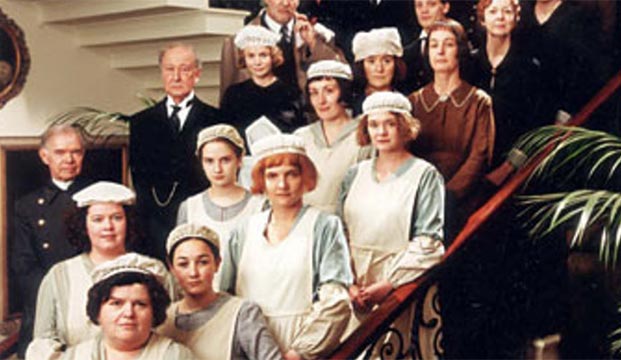
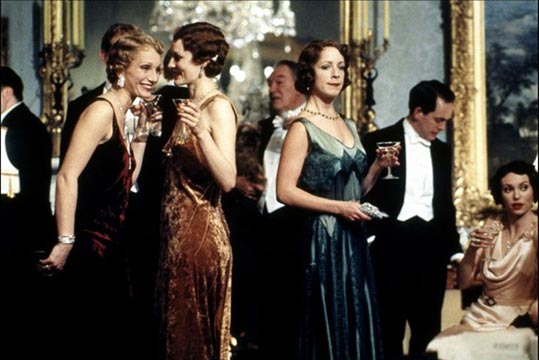
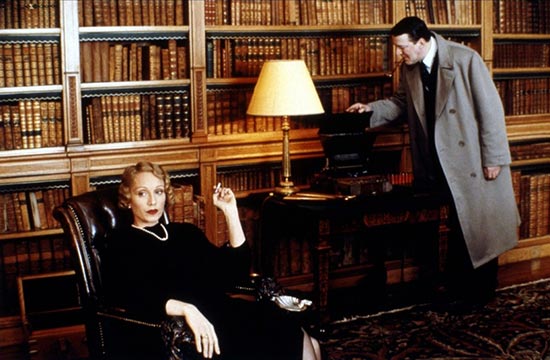
Upstairs among the lords, ladies, countesses, and honorable muck-a-mucks are lassitude, ennui, and a surprising amount of financial anxiety (Those Suez schemes didn't always pan out.) Downstairs, where the visiting servants are addressed by the names of their employers by the butler (Alan Bates), head housekeeper (Helen Mirren), and head cook (Eileen Atkins), a different kind of social order reigns. The boundaries are fixed but porous: The most loving relationship in the film might be between Sir William and his mistress, the head housemaid (Emily Watson), and Lady Sylvia fixes a visiting valet (Ryan Phillippe) with unembarrassed lust. Everything is in motion: Up and down corridors the characters go, past doors that open a crack or close abruptly, past clockwork chores or furtive, half-glimpsed trysts. And while Altman and Fellowes are setting us up for a murder, a visiting Hollywood producer (Bob Balaban) is plotting his Charlie-Chan-in-London mystery by transcontinental telephone, breathlessly reporting that there's one butler but many valets and maids, that servants actually have tasks to perform, that there's all kinds of things that Hollywood mysteries don't show.
The exhilaration is slow to build. It doesn't come from any one thing but from countless crosscurrents, tiny bits of color that fill out the portrait: a fleeting subversive smirk of first footman Richard E. Grant; the Hollywood dreams of second footman Jeremy Swift; the moist, lap-dog attentiveness of Gambon's valet, Derek Jacobi; the stiff, saturnine (inebriated?) imperiousness of Bates' white-browed butler. Slinky, enigmatic visiting valet Clive Owen gives off sinister vibes, like a romantic Boris Karloff. While the matinee idol Ivor Novello (Jeremy Northam) plays and sings for the guests (and the discreetly star-struck servants), Smith's countess bemoans his vulgarity: Does she resent him for being a showman or because he's gay (something only hinted at here)? She's an awful snob, yet the great actress suggests something frightened and vulnerable beneath her ostentatious sense of entitlement.
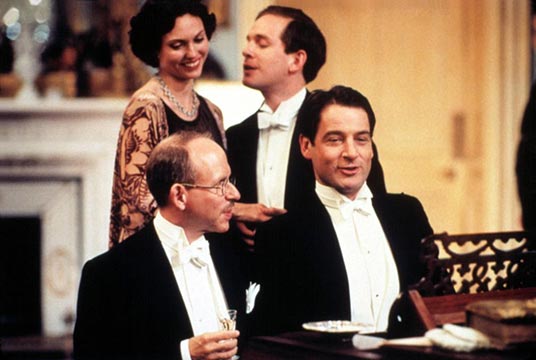
I could go hoarse singing the praises of this cast, of MacDonald's plaintive befuddlement and Watson's heartbreaking (but so sexy) mixture of jadedness and hope. I wanted even more of the lovely Camilla Rutherford as Sir William's discombobulated daughter; of Claudie Blakley as the plain, mistreated wife of a debt-ridden hanger-on (James Wilby); of Atkins' sour and cryptic head cook, whose anti-pathetic relationship with Mirren's Mrs. Wilson is the key downstairs subtext. Mirren has won—and will win—all kinds of awards for this role, for the very good reason that her wrenching final scene makes sense of every disapproving glance and tight inflection that has preceded it. No superlatives of mine can do her justice: You must see this performance.
You say Gosford Park isn't much of a whodunnit? That at this late date we hardly need any more smug lefty reminders of the cruelty of the class system? That this is all such Merchant-Ivory territory? Yes to the above, but Gosford Park transcends these objections and more. What makes the movie miraculous is Altman's gaze. Writing about his Dr. T& the Women (2000), I cited Manny Farber's essay on the "dispersed frame" directors of the '60s and '70s, the ones more fascinated by a "flux-like space" than by bogus order or symmetry. That goes tenfold here: In these bustling, seemingly chaotic frames there are momentous forces at work. In Cookie'sFortune (1999), Altman presented a sort of social ecosystem—a beautifully balanced design for living—that was thrown out of whack by the machinations of a frightened snob (Glenn Close). The natural order reasserted itself, as it did in Dr. T when Richard Gere discovered that he wasn't in control of a universe of women just because he treated them chivalrously and knew their organs inside out. Gambon's Sir William thinks he's in control, too—socially, sexually, politically, economically. He doesn't comprehend the forces that will somehow deliver his executioners to his doorstep and sweep him into eternity. Thanks to Altman's latest masterpiece, we know whoddunnit, we know why, we see a whole teeming world spread out before us, and it almost makes sense.
+++
Sean Axmaker Seanax.com
February 12, 2016
Robert Altman brings his gift for big, sprawling dramas knit with a fine weave of characters and a massive cast up to the task of filling them up with lives to the Merchant Ivory idiom of the manners and manors. I was especially moved by the intentional use of small items to presage class or standing. For example, instead of grand and large scale accoutrements. Altman uses small jewelry items and art objects to indicate status. Notice the very obvious statement rings on Othelia, or the elaborately carved ivory pill box carried obsessively by Stuart. Other jewelry, in the form of platinum cuff links (who wears these?) and gold toothpicks stand out once you are aware of their intentional use. But the statement rings also serve a more sinister purpose - they are weapons. Knowing this small bit, go see the film and see if you agree. The sets and costumes are quite over-the-top and it is not the type of movie where one would see a sensible dog bed for the exotic lap dog, but instead, from all the myriad choices of high end circular dog beds, a brocaded, tassel confection that would compliment the dog's elaborate collar. Interestingly there were no inside lap dogs amongst the guests, just the outside hunting dogs.
Nell Minow Common Sense Media
December 24, 2010
Wonderful British whodunit with some sexual content.
| Original Score: 4/5
Emanuel Levy EmanuelLevy.Com
August 11, 2006
Contents and style converge smoothly and seductively in Altman's luxuriant period drama that applies Agatha Christie murder-mystery format to a rigorous anatomy of British class structure in the 1930s, with all the who's who in U.K. in the cast.
| Original Score: 4/5
Top Critic Tom Charity Time Out
June 24, 2006
Altman's unexpected venture into Agatha Christie territory works a treat.
Jeffrey M. Anderson Combustible Celluloid
May 26, 2006
It's lovely to see that Altman, now in his 70s, still has an acid bite that would sting filmmakers half his age.
| Original Score: 4/4
Jeffrey Overstreet Looking Closer
January 15, 2005
Altman juggles about thirty different characters, moving them from the upper-class upstairs to the servants' quarters... and he does so without losing the audience.
| Original Score: A+
Judith Egerton Courier-Journal (Louisville, KY)
June 25, 2004
Pret-a-Porter and Dr. T. & and the Women, tarnished his '90s comeback, but the ornery Altman is back in top form here.
Full Review | Original Score: 3.5/4
Brandon Judell Gay.com UK
May 8, 2003
please don't raise an eyebrow when you hear such lines as, "Desperate for a ***?" or "Too many fags. They'll be the death of me." The locale here is English society. The date: November 1932. And the "fags" that are being chatted about are puffed on, so pl
Full Review | Original Score: 9/10
Harry Guerin RTÉ (Ireland)
March 4, 2003
Altman takes you from one delicious subplot to another, serving up mirth and misery in equal measure and exploring the gulf between the lives of those above and below stairs.
Full Review | Original Score: 4/5
John R. McEwen Film Quips Online
February 8, 2003
An intruguing commentary on the separation of the classes that will bring back memories of The Remains Of The Day.
Full Review | Original Score: 4.5/5
Wesley Lovell Cinema Sight
January 29, 2003
An interesting ensemble mystery.
| Original Score: ¾
Patrick "Flick" Harrison Film Threat
December 8, 2002
The most leaden and uninteresting threads of the film's first half become the most important elements in the murder mystery.
Full Review | Original Score: 3/5
Tim Merrill Film Threat
December 8, 2002
Blends The Rules of the Game, Upstairs Downstairs and Ten Little Indians into a rich feast that will have adult filmgoers licking their chops.
| Original Score: 4/5
Forrest Hartman Reno Gazette-Journal
September 13, 2002
An ambitious-but-off-kilter film that desperately searches for but never finds its mark.
| Original Score: 2/4
Kevin N. Laforest
Montreal Film Journal September 10, 2002
It bored me so much that I wasn't able to watch it straight through; it took me four attempts to get to the closing credits.
| Original Score: 1.5/4
Mark Palermo The Coast (Halifax, Nova Scotia)
August 29, 2002
Robert Altman expertly depicts pre-WWII British class struggle...There's no better portrait of hierarchical doom.
Jon Niccum Lawrence Journal-World
August 22, 2002
Altman invites an artistic conundrum: Should a movie be considered great if it only fits together after repeated viewings?
| Original Score: ¾
Philip Martin Arkansas Democrat-Gazette
July 26, 2002
...the plot seems little more than an excuse to explore textures and generate atmosphere ... to present us with a microcosm of society worthy of Trollope.
| Original Score: A
Top Critic Michael Wilmington Chicago Tribune
July 20, 2002
A scintillating comedy-drama and one of [Altman's] most richly moving and entertaining pictures.
| Original Score: 4/4
+++
Audience Reviews from 2008
Private U February 16, 2008
Great Cast, for a Murder Mystery.
Birgit E February 16, 2008
I love mysteries and good mystery-films are rare...and I like Maggie Smith!
Aaron W ½February 14, 2008
Altman's only film that isn't explicitley American...but even in a dinner drama set in England we cannot escape the Americana that Robert Altman created so brilliantly
bluepecel bluepecel February 14, 2008
"Tea At Four. Dinner At Eight. Murder At Midnight." ini benar-benar misteri pembunuhan dengan setting klasik ala agatha christie atau alfred hitchcock yang gw suka.
Mia L February 13, 2008
nice portrayal of the servant point of view of what's going on in the house. Its intriguing. I enjoy it just as i enjoy one of Ms Christie's book
Brooke S February 13, 2008
One of those rare murder mystery movies that really deliver
Carlos R ½February 13, 2008
Interesting take on a period piece. Not for the MTV culture.
Private U ½February 13, 2008
This movie is so intricate that despite multiple viewings I know that I still haven't seen all there is to see. The studio made it out to be a whodunnit when they marketed it, and it is nothing of the sort. There IS mystery and intrigue, but that's only a small fraction of the film. It's a study of people and the tensions and releases that happen between them more than anything else, and once again Altman has proved that he is a true master at capturing that on film.
Jill K ½February 13, 2008
Horrible movie in my opinion, put me to sleep in the middle of a movie theater, I was so bored.
David O February 12, 2008
A little slow-paced but interesting nonetheless.
Jordon J ½February 11, 2008
this was good and clever
Helen C ½February 11, 2008
Beautiful portrayal of upstairs/downstairs tensions. But I'm still not sure who most of the charcters were and who was related to who. I can't decide if the answer to "whodunnit" is clever or contrived and more suited to a TV detective serial.
Lisa M February 11, 2008
Far too many characters to keep track of, couldn't remember hardly any of their names, the conclusion was near none existent and no one got murdered until an hour and a half into it!
jackane24 jackane24 February 10, 2008
It never ceases to amaze me how many films get away with murder. And here's yet another example in [i]Gosford Park[/i]. How this won awards I will never know.
It lasts roughly 2 hours 5 minutes - nothing actually happens until about 1 hour 15 minutes in! And even then the bare minimum of action takes place. The film has concentrated so much on the class distinction, characters and relationships, that he's completely forgotten to consider the plot, and it's really boring of him. I was shouting at the screen after 20 minutes - 'Get on with it!' And as a result of doing that for close to an hour, I can hardly speak. Maybe that's a good thing.
The film is set in the 1930s, with a group of a dozen or so wealthy men, accompanied of course by their wives, invited down by the owner, Sir William McCordle, for a spot of pheasant hunting. And that's basically it to be frank with you. If you manage to last long enough, you'll eventually get to a murder case, and to be honest, Homer Simpson and Maggie would do a better job investigating.
Yes the twist in the tale is there, yes Clive Owen is there, yes the cast is there (and Jesus, the cast really is there - seems like the entire cast of Doctor Who has turned up to be in it), but the plot and storytelling is not. I'd far rather watch an episode of Poirot, where they get to the point quickly, tell the story well, and have a tiny Belgian with a fabulous moustache. I'd get far more pleasure.
A week ago I saw [i]Les Invasions Barbares [/i](The Barbarian Invasions), and the difference between that and this, both very much in the same genre, is simply unbelievable. How I can go from such wonderful cinema to this tripe deeply saddens me. Please see the aforementioned masterpiece or [i]Little Fish[/i] long before you consider boring yourself with this dull waste of time, space and money.
Steve R ½February 10, 2008
excellent film, great acting all round though sadly Stephen Fry is badly miscast
Lee Paine Lee Paine ½February 10, 2008
Well boring.....I hated this
Maggie B February 9, 2008
I saw this when it first came out and watched it again on VHS yesterday. My perception of it is enhanced immensely by the fact that I've read/seen "The Remains of the Day" now...they work well as companion pieces, in a way. The cast is great, obviously, and my favorites were Owen, Mirren, Smith, and Fry as the delightfully incompetent detective. I still have a hard time exactly following all the plot lines (particularly the ones involving Isabelle, the daughter), but that's probably more me than the movie.
Private U February 9, 2008
Slow, yeah it is isn't it? What this film needs is a car chase and possibly a shoot-out in the scullery.
Very sharp portrayal of the 'upstairs/downstairs' culture within upper class family homes. Superb ensemble piece by Mr. Altman, and perfectly presented by the players.
Kate T February 8, 2008
I had little or clue what was going on during most of this.
More Background On GosfordParkMovie.com
GosfordParkMovie.com functioned as the official promotional website for the acclaimed 2001 film Gosford Park, directed by Robert Altman. Emerging during the early era of studio-backed movie websites, it served as a centralized digital hub where audiences, critics, and film enthusiasts could explore the film’s narrative, cast, production details, and critical reception.
At a time when websites were still relatively simple and informational, GosfordParkMovie.com reflected a transitional phase in digital film marketing—bridging traditional press kits and modern multimedia experiences. Its emphasis on text, cast listings, and curated reviews mirrored how studios communicated prestige films to an audience that valued depth and context.
Ownership, Studio Involvement, and Strategic Purpose
The website was developed as part of the marketing campaign by USA Films, the distributor behind Gosford Park. USA Films specialized in independent and prestige cinema, often backing projects with strong artistic direction and awards potential.
GosfordParkMovie.com was not a standalone commercial entity but a purpose-built promotional platform. Its strategic objectives included:
- Supporting the film’s theatrical release in late 2001
- Reinforcing its positioning as a high-quality ensemble drama
- Highlighting critical acclaim and awards momentum
- Providing detailed cast and production information to media and audiences
This type of website was common in the early 2000s, when studios invested in dedicated domains for individual films rather than relying solely on centralized platforms or social media.
Film Overview and Narrative Foundation
Gosford Park is set in early 1930s England and revolves around a weekend gathering of aristocrats and their servants at a country estate. What begins as a social event centered around hunting quickly transforms into a murder investigation following the death of the host.
The film blends multiple genres:
- Murder mystery (in the tradition of Agatha Christie-style narratives)
- Social satire
- Period drama
Its narrative structure is notable for presenting two parallel worlds:
- The “upstairs” aristocracy, marked by wealth, privilege, and moral ambiguity
- The “downstairs” servant class, whose lives are shaped by duty, observation, and hidden connections
Rather than focusing solely on the murder itself, the film uses the mystery as a framework to explore class divisions, power dynamics, and human relationships.
Cast, Characters, and Ensemble Strength
One of the defining features of Gosford Park—and a major focus of its official website—was its extraordinary ensemble cast. The film brought together some of the most respected actors in British and international cinema.
Notable cast members include:
- Maggie Smith as Constance Trentham
- Helen Mirren as Mrs. Wilson
- Michael Gambon as Sir William McCordle
- Kristin Scott Thomas as Lady Sylvia
- Clive Owen as Robert Parks
- Emily Watson as Elsie
- Stephen Fry as Inspector Thompson
The website emphasized this ensemble approach, presenting detailed character breakdowns and actor biographies. This was particularly important given the film’s complexity—viewers often needed guidance to keep track of the many interwoven relationships.
Creative Team and Production Excellence
Behind the scenes, Gosford Park benefited from a highly accomplished creative team:
- Screenplay by Julian Fellowes, who would later create the hit TV series Downton Abbey
- Costume design by Jenny Beavan
- Original score by Patrick Doyle
The website highlighted these contributors, helping audiences appreciate the craftsmanship behind the film’s authenticity—from its period-accurate costumes to its intricate dialogue and pacing.
Website Structure and User Experience
GosfordParkMovie.com followed a structured layout typical of early 2000s film websites. Its key sections likely included:
- Synopsis and story overview
- Cast and crew profiles
- Production notes and background
- Critical reviews and press excerpts
- Release information (theatrical and DVD)
Unlike today’s visually heavy sites, it prioritized readability and information density. Navigation was straightforward, often using simple menus and static pages rather than dynamic interfaces.
The absence of streaming trailers or interactive features—common today—reflects both technological limitations and different audience expectations at the time.
Popularity, Box Office, and Audience Reach
Gosford Park achieved significant commercial and critical success. It grossed over $41 million worldwide, a strong performance for a dialogue-driven ensemble drama.
The website played a role in amplifying this success by:
- Providing accessible information for curious audiences
- Supporting media coverage and reviews
- Reinforcing the film’s prestige positioning
Its audience included:
- Fans of period dramas
- Followers of Robert Altman’s work
- Viewers interested in British social history
- Critics and awards voters
Critical Reception and Reviews
The film received widespread acclaim, reflected in high critic scores and numerous positive reviews. Critics praised:
- The complexity of its narrative structure
- The depth of its character development
- The performances of its ensemble cast
- Altman’s direction and visual storytelling
Some critics described it as one of Altman’s finest works in decades, noting his ability to balance satire, drama, and mystery within a single cohesive film.
However, not all responses were universally positive. Some viewers found:
- The pacing slow
- The large cast difficult to follow
- The mystery element less central than expected
This divergence in opinion became part of the film’s identity—appealing strongly to those who appreciated layered storytelling while challenging more casual audiences.
Awards and Industry Recognition
Gosford Park earned numerous accolades, solidifying its place in early 21st-century cinema:
- Academy Award for Best Original Screenplay (Julian Fellowes)
- Multiple nominations across acting and directing categories
- Recognition from major film festivals and critics’ organizations
The website prominently featured these achievements, reinforcing the film’s credibility and encouraging wider viewership.
Cultural and Social Significance
Beyond its narrative, Gosford Park is widely regarded as a significant cultural work due to its exploration of class structures in pre-World War II Britain.
Key themes include:
- The rigid hierarchy between aristocrats and servants
- Hidden dependencies between social classes
- Moral contradictions within elite society
- The invisibility and emotional lives of domestic workers
The film’s influence can be seen in later works, particularly Downton Abbey, which expanded on similar themes for television audiences.
GosfordParkMovie.com helped contextualize these ideas, offering audiences a deeper understanding of the film’s intent beyond its surface-level mystery.
Design Aesthetics and Early Internet Trends
From a design perspective, the website reflected early 2000s internet aesthetics:
- Minimalist layouts
- Text-heavy pages
- Limited multimedia integration
- Static navigation menus
These characteristics made it more akin to a digital press kit than a modern entertainment portal. However, this simplicity also ensured accessibility across slower internet connections and older devices.
Audience Engagement and Legacy
While the site itself may no longer be actively maintained, its archived versions remain valuable for understanding how films were marketed online in the early 21st century.
Its legacy includes:
- Serving as a reference point for early film marketing websites
- Preserving original promotional materials and reviews
- Offering insight into how audiences first encountered Gosford Park digitally
For film historians and digital archivists, GosfordParkMovie.com represents a snapshot of a transitional era—when cinema and the internet were beginning to intersect in meaningful ways.
Insights and Lasting Impact
Several key insights emerge from examining GosfordParkMovie.com:
- Emphasis on Prestige
The site reinforced the film’s identity as a high-quality, award-worthy production rather than a mainstream blockbuster. - Educational Value
It helped audiences navigate a complex narrative, enhancing appreciation for the film’s structure and themes. - Early Digital Marketing Strategy
It demonstrates how studios used dedicated websites to build awareness before the dominance of social media. - Cultural Documentation
The archived content provides a valuable record of critical reception and audience reactions at the time of release.
GosfordParkMovie.com was more than just a promotional website—it was an integral part of the film’s broader cultural and marketing ecosystem. By combining detailed cast information, critical reviews, and thematic context, it offered audiences a comprehensive introduction to one of the most sophisticated films of its era.
As both a digital artifact and a reflection of early 2000s film marketing, the site continues to hold relevance for those interested in cinema history, media evolution, and the enduring legacy of Gosford Park.
